Monday, November 21, 2011

Across the Wide Pacific

Two years ago we twice crossed the Pacific by cruise ship as a creative way of getting to and from New Zealand. We found ourselves cruising across it for a third time because of Citibank. Jeff's son Matt works in their Tokyo office, and a year ago was selected for a management training program. As part of the deal, Matt was assigned earlier this year to work in Dalian China for 12 months. As soon as we heard Matt's news we started searching for repositioning cruises from the Pacific Northwest to Asia. The Diamond Princess's September 17 sailing from Vancouver, stopping at Dalian on October 9 and dropping us off October 10 in Tianjin China, seemed just the ticket.
 
For a number of reasons, the biggest two being uncomfortable beds and bumbling, poorly-prepared lecturers, the Diamond Princess matched up poorly in our estimation compared to the Holland America Volendam, which we took on those cruises, to New Zealand in 2008 and then back home in 2009. That said, the Diamond Princess is still a cruise ship and it's not a bad life even on a cruise ship with some disappointments, and it did get us to China with some good touring in Alaska and in Vladivostok and Pusan. We told you about Alaska in our last post, and will tell you all about the stops in Russia and South Korea in the next two episodes, and limit today's entry to the voyage across the Pacific and to our first stop in Asia, Muroran Japan.

As we visited our last glacier just before the port call at Whittier, our ship hit its most northerly point, about 61.3 degrees from the equator. This is the farthest north we've ever been. This is really north, closer to the North Pole than Helsinki, Stockholm or Oslo, further north than the northernmost islands off the coast of Scotland. Not that it meant much -- it was only a few days after the autumnal equinox, when day and night are exactly 12 hours long everywhere in the world. At this far northern outpost we would have enjoyed 19 1/2 hours of daylight had we been here 3 months earlier, or a mere 4 hours 26 minutes of sunlight in late December, and with the sun never rising even a third of the way above the horizon. Nor did we have a chance to see the Northern Lights, as we had a steady week of clouds and/or rain. Oh well, someday perhaps we'll experience these things, just not this time around.

As we left Whittier for Japan, we followed the Aleutian Islands for three days, for about 1,500 of the 3,505 miles we covered from port to port, each day finding ourselves further south as well as further west. The islands were always quite a ways off in the distance, only visible because they are also incredibly mountainous. The Pacific lived up to its name and stayed more or less peaceful, and we had no further episodes of mal de mer, as Louise experienced for one afternoon when we hit big rollers north of Vancouver Island a week earlier. At a lecture about the ship and how it navigates, they showed us this slide of the stabilizers, enormous "wings" that practically eliminate rolling, the side-to-side movement of a ship, though they do little to stop pitching, the movement up and down of the bow and stern. It was fun to watch the explosion of water near the bow when we did hit a larger than usual wave, but with only dim shapes of land for three days and then no trace of it for three more, that was about all there was to look at outdoors, that and the pulsating energy of the propellers and the wake of the ship as one stood at the stern and both watched and felt them, viscerally.


As you can see from this shot of it while we were docked in Muroran, the Diamond Princess is a big ship, 115,875 tons and 946 feet long to be exact. Decks 1 to 4 we never saw except for a passageway on 4 we sometimes used getting on and off the boat; these are where all the mechanical and storage facilities and cabins for the staff are located. Most of decks 5, 6 and 7 were public areas: multiple dining rooms, a vast theater for lectures and performances, and a casino and shops we entirely avoided. A very attractive atrium linked these 3 decks amidships, and every afternoon and evening an occasionally good string quartet performed. The atrium was also a good place for people-watching.

There were one or two lectures each day when there was no port call, and we went to almost all of them, but as noted only a handful were outstanding. There were performances every night, both in the big theater and in a smaller venue, but again these are not really "our thing." We found one comedian fairly funny, another so bad we walked out within 10 minutes, and we watched the film Water For Elephants, which we loved. Two or three times we watched an old movie or a History Channel program on the tv in our stateroom. That was it for ship-provided entertainment on the 23-day cruise. We spent far more time reading, Louise on her Kindle and Jeff on the iPad.


Our cabin was one of the least expensive, an inside one on deck 9. It was 2 to 4 decks down to the main public areas in the lower part of the ship, and 4 to 6 decks up to the ones on the upper decks, and we rarely used the elevators so we got plenty of exercise. 12 days on our 23-day voyage we had no port call, and our pedometer tells us we walked 75 miles total on those days, or just over 6 miles a day. A few times when we felt we hadn't gotten enough exercise, we started on the bottom deck and walked every public corridor we could walk without covering the same point twice until we reached the topmost deck, and found that we had hiked over two miles! And that was just inside -- add the outside decks on 7 and 15 and you can add about a half mile more.  It was truly a big ship!


Mealtimes are always wonderful on any cruise ship. We ate in the cafeteria-style dining room on deck 14 for all our breakfasts and lunches and for almost half of the dinners. It was bright and cheery, but you usually sat as a couple at your own table and did not often mingle with other passengers. The food was excellent, more so when we learned where and how to get made-to-order omellettes at breakfast. The serving area looks so inviting just before it opened, when we took one of these shots, but look out when the doors opened for a meal, it looked like a Chinese street at rush hour. With so many food stations and almost all of them self-serve, however, it moved remarkably fast. And did we mention the chocolate-filled almond croissants that Jeff had roughly 22 of our 23 mornings?


There were several dining rooms with sit-down service where we more commonly had dinner, usually asking to be seated at a table for six. Our past experience was that a table for eight put some people too far away for conversation, but six allowed you to converse with everyone and gave you two couples to chat with in case one of them turned out to be duds. Our favorite couples were these folks from Delaware who knew each other and spoke Mandarin between themselves but were happy to have us join them and chat in English. One had come from Taiwan, the other from a Chinese community in Burma, in both cases emigrating to America when the husband got a scholarship to graduate school in the US. Their life stories were quite fascinating to us, and our wide-ranging travels were equally amusing to them, and we all enjoyed a similar eagerness and excitement about seeing the world from our cruise ship.


Yes, the food was tasty and, if you selected carefully, healthy. Each half of the cruise they offered a tour of the kitchen, which Jeff took both times, and he was impressed with it's size, orderliness and cleanliness. We took a photo one evening of the menu (actually about 2/3 of it, as there's a second page with a dozen items available every day, including shrimp cocktail, Caesar salad, and both salmon and steak main courses), and of the grilled veggie appetizer and our main courses. The serving sizes were modest enough to keep one from overeating - or to allow one to try an extra appetizer or salad - and always very nicely presented. Our belts told an even nicer story: neither of us put on any noticabe weight despite all that wonderful food.


3,505 miles from Whittier, Alaska we finally hit land at Muroran, Japan. For six days and seven nights we had pushed on at 18.8 knots -- almost 22 mph -- and crossed six time zones and the International Date Line. Each of those six days was therefore 25 hours long. This proved to be a little tiring but manageable, and far far easier than two years ago when we had six consecutive 23-hour days. By the fifth of those, Jeff gave up trying to sleep at 2 a.m. and walked around the ship, discovering to his surprise that a fourth of the passengers were doing the same thing as their bodies failed to feel tired with so many too-short days and nights. This time around we felt and observed a smooth accommodation to the demands of the clock. As for the Date Line, we lost Wednesday September 28. Poof, gone! It just never happened! As recompense, of course, when we head back to the US we get to try out November 18 twice, when we leave Shanghai at 9 p.m. that evening and arrive in LA the same day, but at 3:30 pm!

Muroran was a disappointment, though a lot of the blame goes to the Japanese Customs and Immigration folks who decided they wanted an electronic fingerprint as well as the usual passport check of everyone getting off the ship. It was so badly bungled that we stood in line 90 excruciating minutes, watching any hope of getting out of Muroran to a national park 50 km away drift away and finally vanish. There just wasn't time enough left for the train-bus trip there and back to work and still have enough time to see the sights so tantalizingly described in our guidebook.

The city was one we had never heard of before, as it's a fairly gritty factory and port town with no real attraction other than its accessibility to that national park and (but with a 3-hour drive each way) to Sapporo. Folks who paid the big bucks for Princess-organized tours did get to board all those buses waiting while we did the fingerprint foolishness, and they did do their tours, though the visit to Sapporo was ridiculously brief compared to the travel time to and from. The rest of us made the best of Muroran, which was not much. We found an Internet cafe and caught up with email and checking the bank and credit card accounts; we found a charming ramen shop where you sit at a counter around the small kitchen, and got bowls of soup that brought waves of nostalgia to Louise; we visited a mildly interesting Shinto shrine; and we talked for a while with an American English teacher and one of his students, part of a welcoming group that Princess had arranged and stationed all around town. But compared with the port stops we made on the Volendam at two other cities not far from Muroran and which we glowingly described in this blog two years ago, Hakodate and Otaru, this was a downer. We hope Princess either chooses one of those ports, persuades the Japanese that they have to do a far better job of letting passengers disembark from cruise ships, or both.


It's now on to Vladivostok and our first visit ever to Russia. We'll tell you all in our next entry.


A Week in Alaska

And now to China -- but with a week in Alaska for starters. In that week we saw Ketchikan, Juneau and Skagway, spent two days amongst the glaciers, waved "hi" to a wide assortment of wildlife, and finished with an entirely forgettable day in Whittier dropping off some passengers and picking up new ones. We also got 1,869 miles and one time zone closer to China. The big push across the Pacific will come next week.
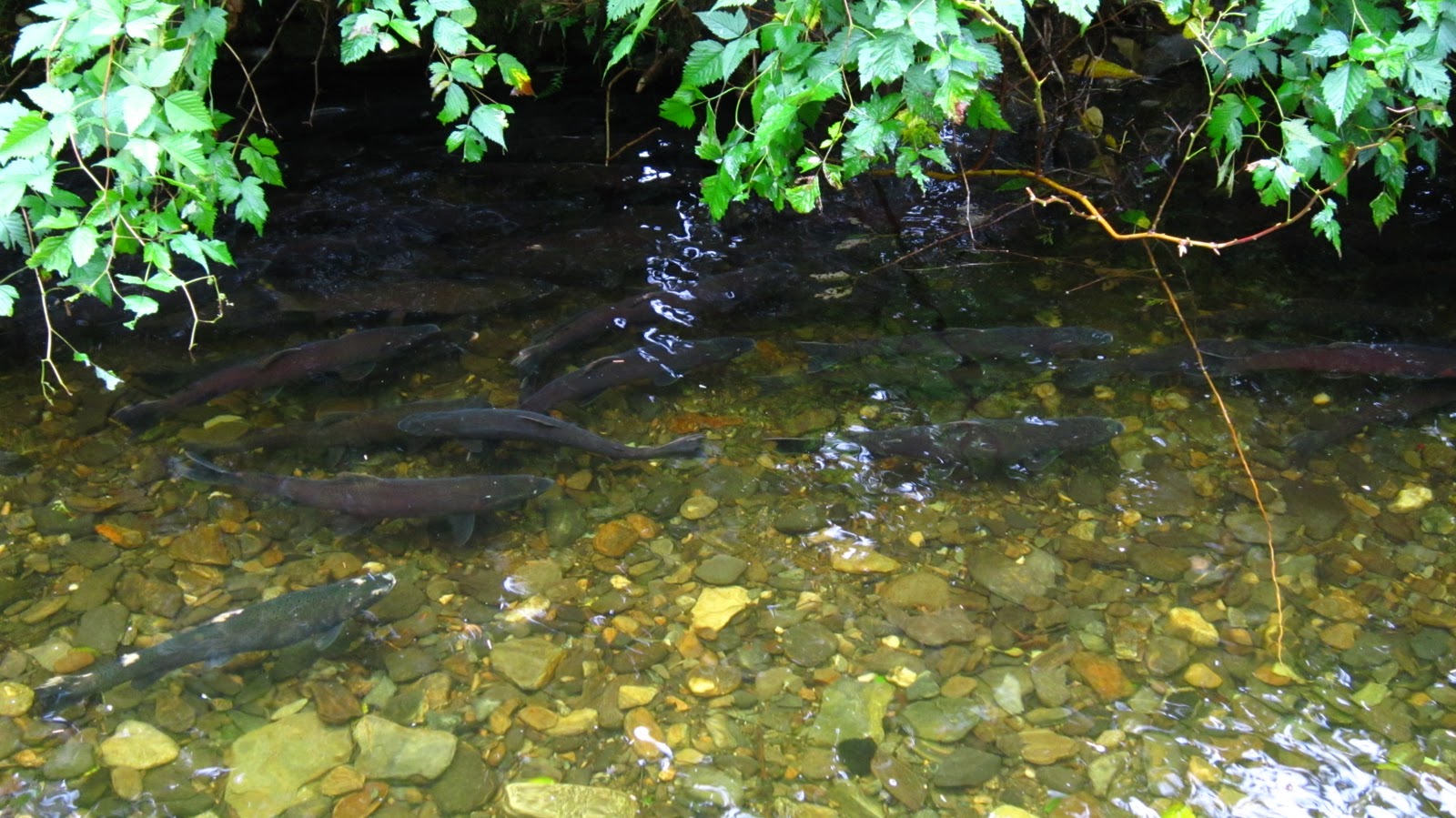
We pulled out of Vancouver BC past the ever-present pile of sulphur, preceded by a Holland America boat. It turned south to Mexico and we headed north to Ketchikan. We visited here on the Holland America Volendam on our way back from New Zealand, and Ketchikan is still just as much a tourist trap the second time around, except that this time we shared it with only two more cruise ships our size instead of three, meaning 8000 passengers and 1000+ crew members on shore leave were out there, looking for things to do. We did the obligatory walk up Creek Street and Louise modelled her new hat from Vancouver's Hudson Bay Company store. We marveled at the salmon heading upstream to spawn. We admired a totem pole outside the Totem Heritage Center but passed on entering - well, really passed on paying the admission fee as we've seen the better collection in Vancouver. We walked to the edge of town then back to a viewpoint overlooking our ship, the Diamond Princess. OK, that killed an hour . . .


We returned to the ship for lunch, then headed off to the public library to take advantage of a free hour of wifi, did a little browsing and a little aimless wandering, and by golly it was time to reboard. It was hard, but we did pass on buying the fur bikini set. Wrong shade of red. Later that day a crowd gathered on deck as we passed through an area where hunchback whales tend to hang out. We did indeed see a half-dozen, though none stood still long enough to have his or her photo taken.


Juneau was a far more interesting stop, but the town was not the attraction. Getting off the ship, the town clusters in that valley just ahead. We climbed through town past the ancient Russian Orthodox church and onto Basin Road, past a sign reassuring us that there is a half-mile DMZ around Basin Road protecting us from ex-governors and other Alaskan gun nuts.


And what a road it was! A little over two miles from the heart of downtown it turned into a hiking path that climbed into the sky past glorious waterfalls and an ingloriously decaying gold mine that was once the largest in the U.S. Oh, it was good to get out in the woods like that, even though we had to yell out "Hey Bear!" every minute or two to let them know we were in the vicinity. Rangers at Glacier National Park taught us to do this years ago, since bears just hate surprise visits from humans. Let 'em know you're coming and they'll leave is the theory.


Part way up the trail we found a sign telling us that our narrow shelf of dirt and rock was Alaska's first road, servicing gold mines up this valley. That must have been an exhilarating drive! Well, we were thoroughly soaked on our return to the ship, but with dry clothes on him and a hot lunch in him, Jeff managed a second trip out into the steady hard rain to do an hour of Internet at a cafe, mostly catching up on checking the bank and credit card accounts.


Skagway was our third stop. Captain William Moore was a prescient fellow. He had done some prospecting himself and knew that other gold hunters were wandering all over Canada's Northwest Territory. In 1887 he staked a homestead claim in what is today Skagway on 160 acres at the base of White Pass, the lowest pass over the mountains from Alaska to the NWT. He farmed enough to "prove up" his homestead claim, and he waited. And waited. Nine years after he arrived and built the cabin you see here, a few fellows 300 miles to the north were stuffing every sack they owned with shiny rocks that were turning them into millionaires, and Captain Moore's ship came in the next year as the Klondike Gold Rush began and the population went on from 7 Moores in 3 generations to 10,000 mostly single fortune-seekers. Except it was more complicated than that. Those thousands descended onto his property with little regard for fine points like legal title to land, and it took several years of litigation before he, too, joined those first miners in the millionaires club.

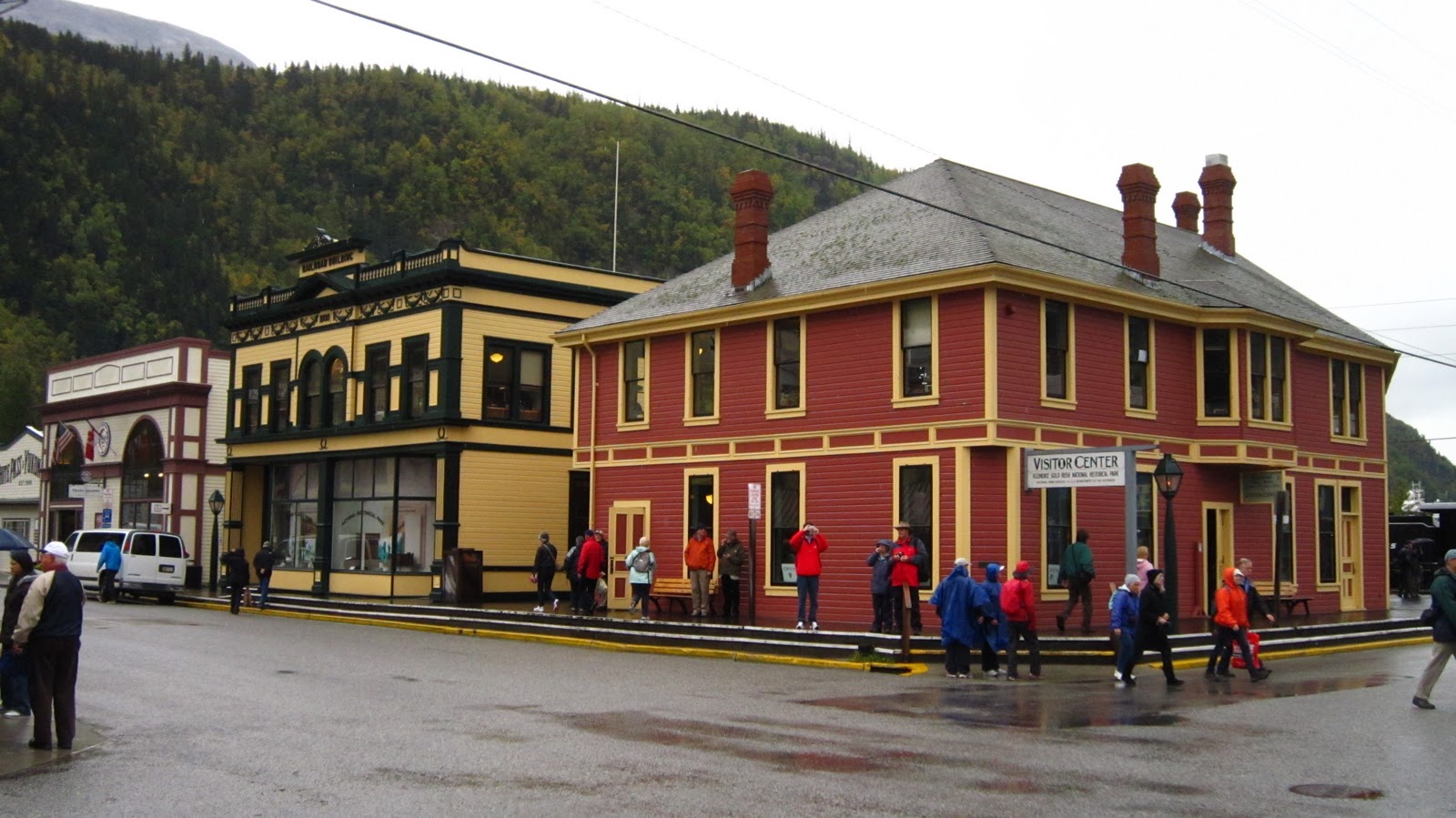
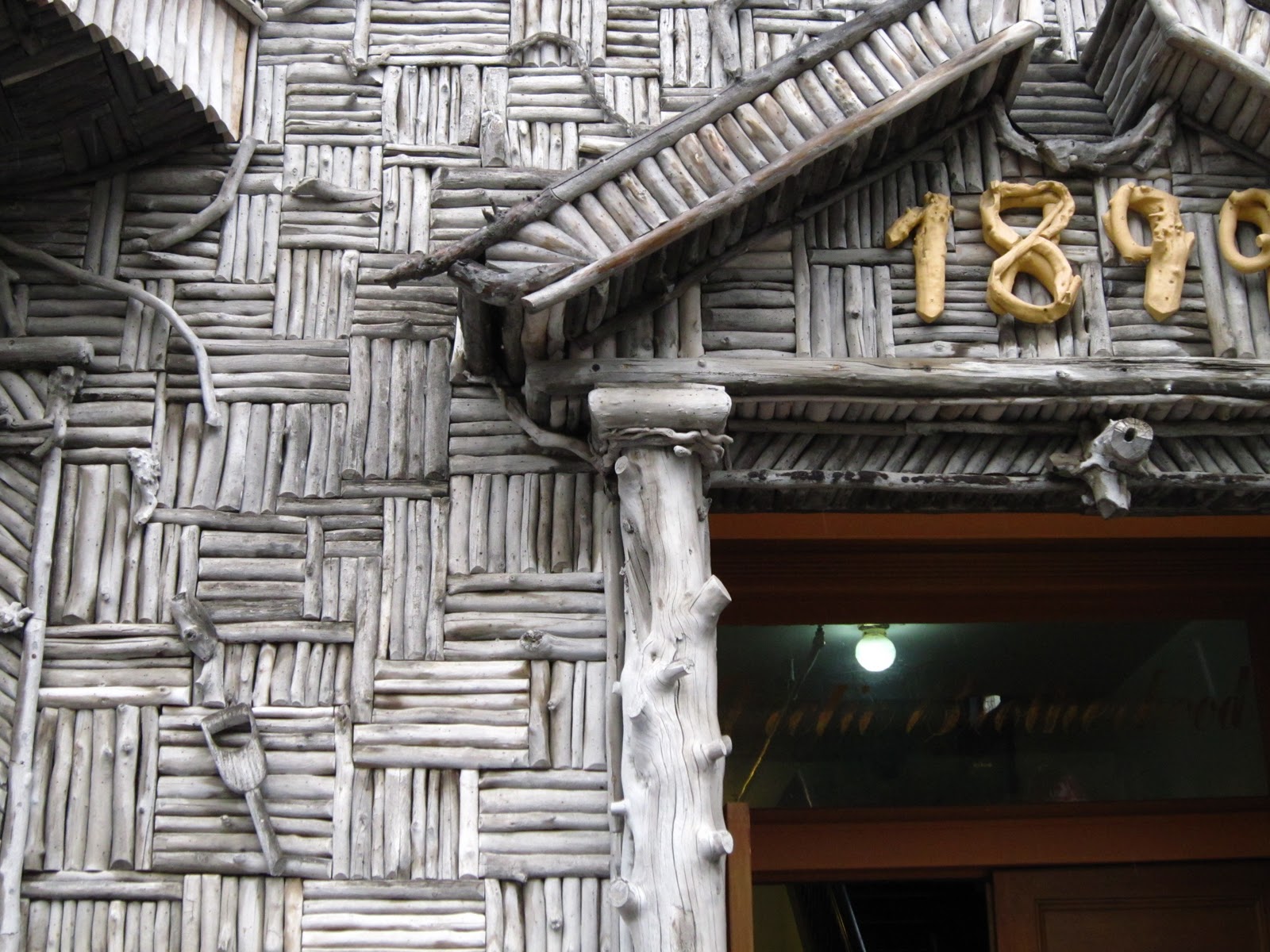
The National Park Service today owns a lot of historic downtown Skagway and leases much of it out to stores that agree to properly conserve the buildings and spirit of Gold Rush Skagway. The 1899 Arctic Brotherhood building, a fraternal organization that fizzled out 20 years later, is now the tourist bureau and reportedly the most-photographed building in Alaska thanks to the 8,800 pieces of driftwood adorning it.


The Park Service runs a small but excellent museum that brought the Klondike Gold Rush to life, such as this model of just how many provisions a miner had to bring before the Canadian Mounties would let him cross the border in search of gold. It was supposed to be enough clothing, equipment and food to last him a year, and it weighed approximately a ton - 2,000 pounds!


The vast majority of miners actually hiked from nearby Dyea up the Chilkoot Pass, a taller crossing but several miles shorter. Since it took many trips up and down the trail to bring your ton of goods to the top, short was important. Just as the gold rush was almost over, however, a railroad made it over White Pass and on to Whitehorse, and Dyea became a ghost town. Skagway survived, and the White Pass and Yukon Railroad today is mining tourists better than any of those early settlers mined gold. $117 gets you a 2 1/2 hour round trip to the summit, $129 if you buy it as an excursion from the boat (you get a 4 minute bus trip to the train station for the extra $12), and we saw four pairs of locomotives each pulling about 15 fairly full passenger cars, and that was mid-day on the second of three runs! There were 4 cruise ships in port and we estimate their passengers left close to a quarter of a million in the railroad's coffers that day, plus who knows how much more in the shops in town. OK, we admit it, a few of those dollars were ours as we picked up a stuffed toy for grandson Tyler, whom we see in two weeks.


But other than bemusement as we captured the illusion of a "stretch" cruise ship from two Norwegian Cruise Line boats docked on a neighboring pier, and astonishment at the number of jewelry stores on the main street (we've never heard of a diamond mine in Alaska, though there's an average of two diamond stores per block in one part of town), we pretty much limited ourselves to the National Park sites and to another hike into the wilderness. Two blocks from the train station you enter the woods and start climbing over a wooden bridge and past a spot overlooking the other 2 of Skagway's 4 cruise ship berths, the last signs of civilization for a while.


A 45-minute steep climb on a somewhat rough trail brought us to Lower Dewey Lake. We alternated between views across the lake and up into the towering mountains, then down at our feet at the rocky trail and an amazing variety of mushrooms. Half-way around the lake the off-and-on light mist of the morning became another hard steady rain, and then the trail changed for a quarter hour from a path to a rock scramble on all fours, but once again the chance to get into such stunning nature made the day a big success.


The next two days involved sightseeing from the decks of our ship, and we lucked out with dry days in the 50s. Jeff visited Glacier Bay on a cruise ship in May 1987, and saw a lot of wildlife and several excitingly large splashes as ice "calved" off the glaciers. On these two days we saw a few whales, a small pod of porpoises and a few dozen sea otters, one of them floating on an iceberg, plus acrobatics from hundreds of starkly colored kittiwakes, but sadly much less than on the earlier trip. The glaciers were also having off days.


That said, the scenery was still awe-inspiring. We'll turn off the audio commentary for a while and let a batch of our favorite shots speak for themselves. To get a sense of the scale, keep in mind that all but the last 3 shots were taken from a deck 75' above the water, and the last three from the top deck at twice that height.


Welcome back. The first shots were in Glacier Bay, the last ones on College Fjord the next day. This second waterway is where a bunch of university science professors sailed into an area previously blocked by ice and named the newly-discovered glaciers after various East Coast schools. We parked for an hour in front of Harvard Glacier, down the street from Vassar and around the corner from Yale, among others.

Sixty of our fellow passengers missed Glacier Bay. They took an excursion the day before while we were in Skagway, jet-boating 25 miles to Haines for some bald eagle watching. As that heavier rain moved in mid-day, so did an intense wind storm. It was too dangerous for their boat to return to Skagway! Luckily an Alaska state ferry was also stuck in Haines, with 40 - 50 empty staterooms. The eagle-watchers spent the night on that ferry, albeit toothbrush-and-pj-less, and rode it the next morning to Juneau, where Princess chartered a jet boat which brought them to the mouth of Glacier Bay. The rendezvous worked smoothly, and we heard later that some whale and porpoise sightings plus perhaps a free beer or two on the Princess tab left them feeling OK about the incident. In any event, College Fjord was every bit as stunning as Glacier Bay, so they made out just fine. They probably also appreciated that the Diamond Princess came to a dead stop for their reboarding. A half hour earlier our National Park Service guides for Glacier Bay disembarked while we did 16 knots on a southerly course.


One week out of Vancouver we reached Whitter. It was created during WW II to bring supplies to Anchorage and on to the Alaska Highway that was being hurriedly cut through the wilderness, in case the Japanese tried to attack the U.S. from the north. As it turned out, they did, but never got closer than the Aleutian islands of Attu and Kiska, almost as far from Anchorage as Seattle is. After WW II Whitter remained a military installation, this time because of the fear of Russia. Today Whitter is dominated by two enormous buildings, each one the largest structure in Alaska when it was built. The Buckner Building off to the left was abandoned when the military pulled out about thirty years ago, and is today an empty and heavily-vandalized hulk brooding down on this cold, wet place. The Begich Building has been renovated and looks better now than when it was built over fifty years ago, and today houses 98% of the population of Whittier. You can even go by underground tunnel to the public school from it! It's certainly an improvement over the housing options during the 1940s, as seen in an old photograph we found in town.


With pretty much every "sightseeing" spot covered in 15 minutes, and with a steady rain and a temperature of 50, the highlights of our port call were a slow inspection of the lone grocery store, the last chance to buy American products for the next 2 months - and we did come up with $10 of odds and ends to purchase - and a long visit to the cafe to use wifi in one last orgy of connectedness before our week-long crossing of the Pacific. Back on the boat we still had a good cell phone signal so called up family and friends for one last chat before we suspend service 'til our return in late November.


OK, time to let go of North America. For the next 6 days and 7 nights our ship's engines will be pounding as we cover over 3,000 miles to Japan. With lots of time to explore the boat, we'll tell you about our floating palace in our next blog from the other side of the Pacific.